Business guide
Starting a Sari-Sari Store
Plan your first shelves and find out how much of the day’s takings you can bring home while keeping enough to buy tomorrow’s paninda.
Plan your store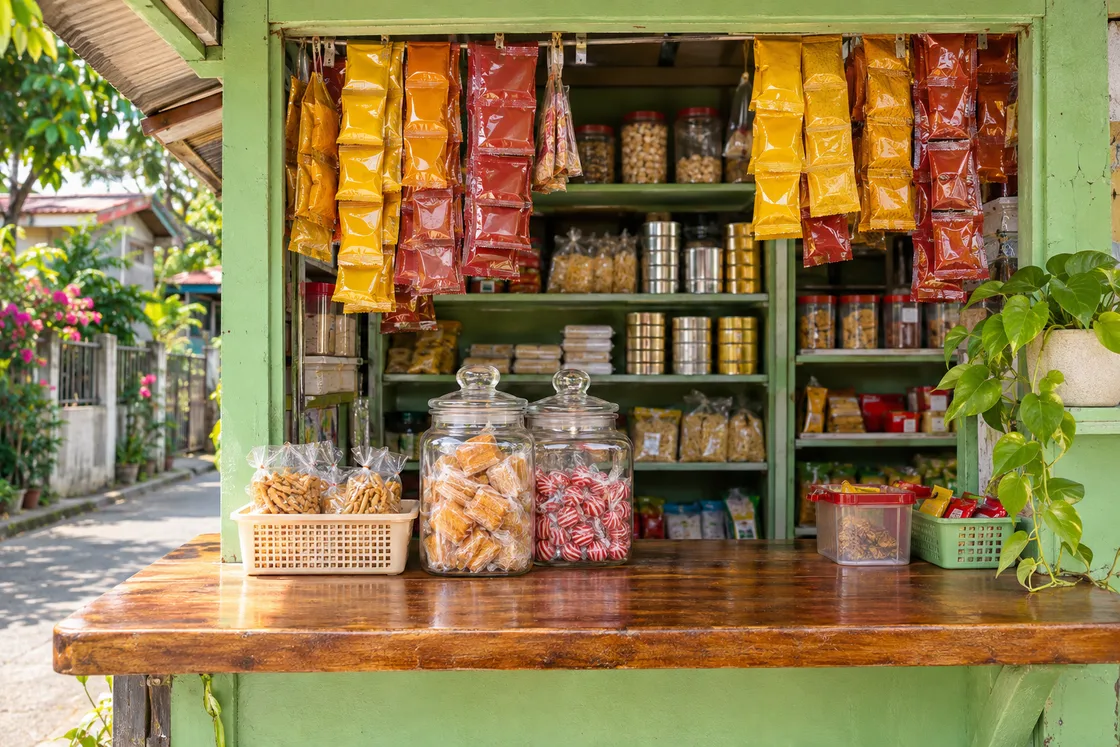
Find a spot where neighbors already buy
Walk the proposed selling area at breakfast, after school and in the evening. Ask nearby households what they bought yesterday, which pack size they chose and where they had to walk for it. Compare a few ordinary weekdays with a weekend before committing to rent.
| Location | Advantage | Drawback | How to test |
|---|---|---|---|
| A window facing your residential street | You can test demand using space you already have. | A quiet lane or another tindahan next door can limit sales. | Ask ten nearby households what they run out of between grocery trips. Count buying visits at the nearest store during your planned hours. |
| Near apartments or boarding houses | Small packs can suit renters buying for one meal or one wash. | Turnover and payday credit requests can make collections uneven. | Ask tenants which pack sizes they buy and how often. Compare the extra rent with the gross profit those sales could bring. |
| Along a commuter or school route | Morning and afternoon foot traffic can support quick snack and drink sales. | A busy walkway can be quiet outside rush hour or during school breaks. | Count actual stops on a school day and a weekend. Ask the property owner and local permits office whether selling is allowed at the spot. |
Before buying shelves or signing a lease
For a sole proprietorship using a trade name, check DTI business-name registration. Ask your city or municipal business permits office about barangay clearance, permission to operate from the address and the local fees. Check BIR registration, invoicing and books before opening. 2026 Philippine business registration guide, page 30
Business registration checklistBudget for your first shelves and your next order
Start with a short list of goods people already buy nearby. DTI’s starter guide groups opening stock into groceries, toiletries, laundry products and drinks. Its prices date from 2010. Get fresh quotes for the brands and pack sizes you plan to carry. DTI sari-sari store starter guide (2010)
List the counter, shelves, price labels, cash box and storage you already have. Add a cooler only if expected cold-drink sales can cover its cost and electricity. Keep change and a buying reserve separate from the first stock order.
Opening capital estimate
These editable figures illustrate a home-front store. Enter local quotes and include any advance rent, deposits or setup work your site needs.
Price by the piece and test a day of sales
Divide the delivered pack cost by the pieces you can sell. At ₱120 for 12 sachets, each costs ₱10. Selling one at ₱12 earns ₱2 before expenses. That is a 20% markup on cost and a 16.7% gross margin on the selling price.
Compare identical brands, sizes and pack counts. DTI publishes suggested retail prices for covered goods and provides local price monitoring and price-freeze information. Check the current bulletin and any applicable price freeze for your area. DTI price monitoring and suggested retail prices
What’s on your shelf?
Replace these sample prices with your supplier’s replacement quote, including delivery. Enter every piece sold, including sales on utang. Add a row for each product with a different price or pack size.
Count what can come out of the till
A sale on utang takes an item off the shelf today. Write down the amount and agreed payment date, and keep that item’s replacement cost in the restocking budget. When the customer pays, record a collection once. The original sale has already been counted.
Enter spoilage at the cost of replacing damaged or missing goods. Spread rent, electricity and wages across trading days. Use the extra set-aside for taxes, debt payments or a reserve top-up. Each cost belongs in one field.
Cash to take home today
₱45This is what remains from the day’s receipts after replacing stock and covering the amounts you set aside.
- Value of all pieces sold
- ₱800
- Less new utang
- ₱100
- Plus earlier utang collected
- ₱40
- Cash received today
- ₱740
- Replace pieces sold
- ₱630
- Replace spoiled or missing stock
- ₱15
- Cover operating costs
- ₱50
- Keep extra cash aside
- ₱0
- Total to restock
- ₱645
- Estimated operating profit
- ₱105
- Simple capital payback
- 11 months
Gross profit by product
| Product | Sales | Gross profit |
|---|---|---|
| Coffee sachet | ₱360 | ₱60 |
| Instant noodles | ₱240 | ₱60 |
| Detergent sachet | ₱200 | ₱50 |
Operating profit uses current replacement costs and includes credit sales. Payback divides opening capital by a month of similar trading days, assuming customers pay in full. Taxes, financing, and household withdrawals are outside that estimate.
Worked example · from ₱800 in sales to ₱45 to take home
On the sample day the store sells ₱800 of goods. Customers put ₱100 on utang and pay ₱40 of older balances, so the till receives ₱740. Replacing the items sold costs ₱630. Allow ₱15 for spoilage and ₱50 for expenses. That leaves ₱45 to take home. The ₱60 gap between that cash and the ₱105 operating profit is the increase in unpaid balances.