Business guide
Starting a Piggery Business
Plan a batch of weaned pigs for sale by live weight. Check the site, price the feed and see what a buyer must pay to cover your costs.
Check your site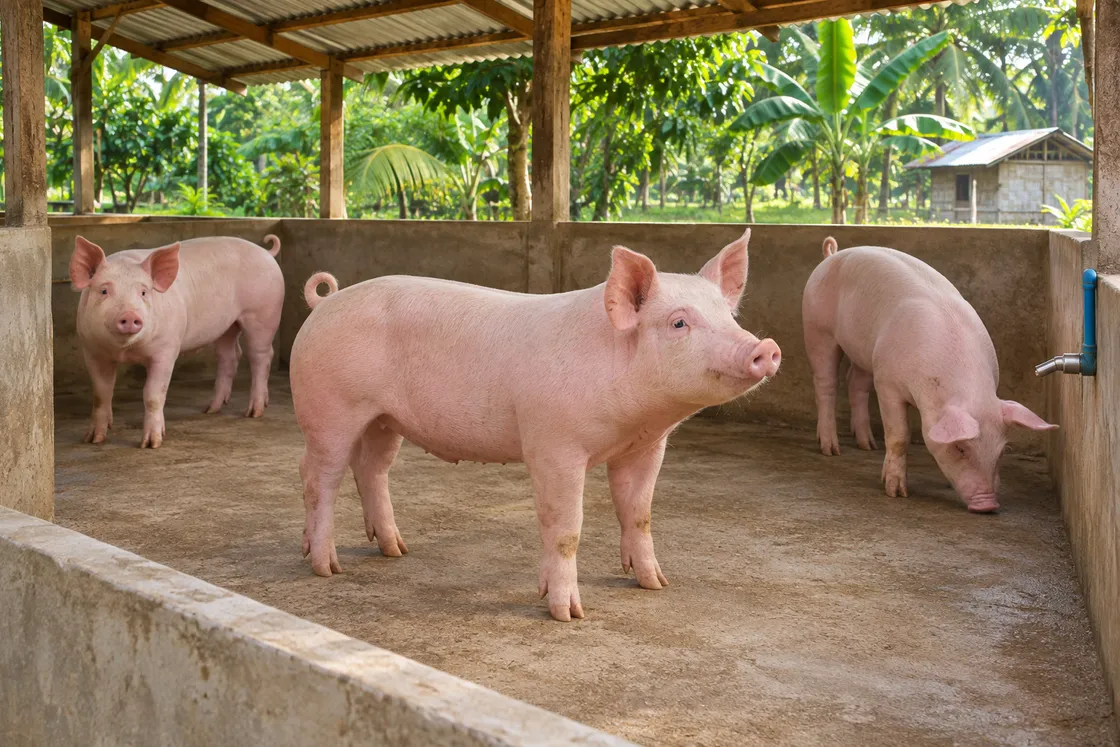
Clear the site before building a pen
This guide follows a grow-out batch, or pagpapataba ng baboy. You buy weaned piglets, fund their care until sale and receive payment when the buyer takes the hogs.
Take the address, proposed number of pigs and pen layout to the local zoning and permits offices before signing a lease. Ask which clearances and setbacks apply. Patnongon’s 2023 code, for example, sets a three-head limit for backyard piggeries in rural residential areas and bans them in urban areas. Ask for the rules in force at your own address. Patnongon Revenue Code, section 3A.03
| Location | Advantage | Drawback | How to test |
|---|---|---|---|
| An existing pen on your land | A sound roof, water line and pens can reduce the opening budget. | Repairs or inadequate waste handling can outweigh the savings. | Confirm the address and head count with the LGU. Inspect drainage, water supply, fencing, ventilation and room for the pigs with a local livestock adviser. |
| A leased livestock site | A working pen can get a first batch under way with less construction. | Rent continues if stocking or collection is delayed. | Get written permission for hog raising. Agree who pays for repairs and waste management and whether the lease lasts through sale and cleanup. |
| A new pen on agricultural land | You can plan water, waste storage and truck access together. | Construction and approvals tie up cash before the first batch. | Take a site sketch to the planning office and EMB. Get itemized construction and utility quotes and check that a buyer’s vehicle can reach the site year-round. |
Trace where rain and pen wash water will go. Price a way to collect manure and handle wastewater, then ask the regional Environmental Management Bureau which environmental clearances and discharge permit apply to the site. Check the water supply in the dry season and the road during heavy rain. DENR–EMB wastewater discharge permit guidance
Clear the route with the local veterinarian
Before buying piglets, ask the city or municipal veterinarian about current African swine fever (ASF) restrictions at the source farm, your site and the buyer’s destination. Confirm facility registration, veterinary health documents and shipping requirements for the route. Recheck before sale. Arrange routine veterinary care and a farm biosecurity plan before stocking. BAI animal facility, shipping and veterinary services · BAI African swine fever bulletin, 6 November 2026
Business registration checklistGet a liveweight offer before buying piglets
Get dated liveweight offers from two buyers. Ask about their weight range, who supplies the scale, where weighing takes place, deductions, collection date and payment terms. Budget for extra feed and labor if pickup slips. Use the price paid per kilogram of live hog at the farm gate.
PSA’s preliminary national farmgate average for slaughter hogs was ₱155.06 per kg liveweight in July–September 2026, down from ₱191.51 a year earlier. On one 90 kg hog, that difference is ₱3,280.50. Replace the benchmark with a buyer’s local offer. PSA livestock bulletin, July–September 2026, figure 16
Write down the minimum size for pickup and the price for an underweight hog. If the buyer deducts hauling from payment, enter the gross offer and include hauling once in the batch costs.
Fund the pen and the first batch
Before the piglets arrive
The five-hog example assumes a usable pen at a site cleared for five pigs. Price any work on roofing, flooring, drainage and waste storage, plus feeders, drinkers and permits. Enter these one-time outlays separately from the cost of raising each batch.
Piglets and feed
Ask for the delivered piglet price at a stated age and weight. The example uses ₱4,000 per weaned pig and buys all batch feed in whole 50 kg sacks, starting with empty feed storage.
A DA planning example takes a pig from about two months old to 90 kg over roughly four months. Its starter, grower and finisher quantities total about 206 kg during that period. Ask your supplier and veterinarian to estimate feed for your starting weight and target sale weight. DA Hog Industry Roadmap, tables 9–10
Feed price references
Agrilife’s Cebu listings checked on 22 November 2026 showed ₱1,895 for starter, ₱1,803 for grower and ₱1,747 for finisher, each for a 50 kg sack. The worked example uses an editable ₱1,800 at each stage. Use your supplier’s actual sack weight and delivered price. Agrilife Cebu feed listings
Running costs for the whole batch
Allow for water, veterinary visits, cleaning supplies, feed delivery if charged separately, paid labor and transport to sale. Add the value of your own unpaid hours and the share of pen and equipment wear used by this batch.
- Piglets
- ₱20,000
- Whole sacks to buy
- ₱37,800
- Other batch cash costs
- ₱8,200
- One-time setup
- ₱0
Feed purchase by stage
- Starter · 150 kg needed
- 3 sacks · ₱5,400
- Grower · 500 kg needed
- 10 sacks · ₱18,000
- Finisher · 400 kg needed
- 8 sacks · ₱14,400
Keep a separate buffer for delayed pickup or unexpected costs. Cash covers all sacks purchased. Full batch cost charges only the feed used, plus owner labor and wear. Any usable feed left over can go toward the next batch.
Compare the buyer’s offer with break-even
Enter your buyer’s price, the weight you expect the scale to show and a possible price drop. The expected sale assumes all pigs purchased reach the buyer. The last scenario assumes one fewer hog sells after the same batch costs have already been incurred.
Full-cost break-even
₱160/kg₱72,000 in batch costs across 450 kg of expected liveweight.
Expected sale
5 hogs · 450 kg at ₱155.06/kg
- Sale proceeds
- ₱69,777
- Cash after batch expenses
- ₱3,777
- Full-cost break-even
- ₱160/kg
- Batch loss
- ₱2,223
Lower buyer offer
5 hogs · 450 kg at ₱145.06/kg
- Sale proceeds
- ₱65,277
- Cash after batch expenses
- -₱723
- Full-cost break-even
- ₱160/kg
- Batch loss
- ₱6,723
One fewer hog sold
4 hogs · 360 kg at ₱155.06/kg
- Sale proceeds
- ₱55,821.6
- Cash after batch expenses
- -₱10,178.4
- Full-cost break-even
- ₱200/kg
- Batch loss
- ₱16,178.4
Cash after batch expenses deducts ₱66,000 paid for this batch. One-time setup is counted in first-sale funding, and wear is charged per batch. Results are before financing and tax. A reduced offer bottoms out at ₱0/kg.
Worked example · five hogs at 90 kg
Five 90 kg hogs yield 450 kg to sell. At ₱155.06/kg that brings in ₱69,777. The batch pays out ₱66,000 in cash, leaving ₱3,777. Allow ₱6,000 for the owner’s time and wear on the pen and the batch has a ₱2,223 loss. If only four hogs sell after those costs are incurred, the break-even price rises from ₱160 to ₱200 per kg.